15 October 2011

How Has Pitching Velocity Changed in Past Decade?

I was reading a few books on baseball from the 1970s and found it amusing how often a pitcher throwing 90 mph was a flamethrower and that mid 80s was considered sufficient.  Nowadays, success with those velocities would be considered highly improbable.  This left me wondering if our comprehensive measurements of mean fastball velocity since 2002 (from FanGraphs) could show any differences in the number of hard throwers in the past decade.

Starting Pitcher Velocity

Click to Enlarge
Pitchers throwing a mean fastball velocity above 90 mph has increased to 188% in 2011 compared to 2002.  Pitchers throwing harder than 94 mph has doubled over that same time period.  This growth in velocity at the Major League level occurred in 2007 and continues to increase.

Reasons I can think of for this occurring:
  • Teams want their pitchers with higher velocity to pitch more often and refrain from converting them to relievers.
  • Starters are being trained to pitch all out for shorter outings rather than trying to dialing down to last the entire game.
  • More hard throwers are available.
    • Fastball velocity is being valued more and baseball is able to out recruit other sports for these prospects.
    • Teams are more willing to convert hard throwing outfielders, middle infielders, and catchers to pitching. 
A number of these ideas could be tested by merely making a similar graph seen above for relief pitchers.  If we also see an increase in the number of hard throwers in relief then we will know that the overall population of pitchers are throwing harder.  That would run contrary to the first two reasons and point toward the third one as valid.

Relief Pitcher Velocity
Click to Enlarge
We see a similar increase in velocity as we did with starters.  However, growth is slow and gradual from 2002 to 2008.  In 2009, velocity jumped up and plateaued.  Relief pitchers with a mean fastball velocity above 93 mph increased to 221% in 2011 over what was available in 2002.  Perhaps more amazingly, pitchers throwing on average more than 96 mph increased 1,200% from 2002 to 2011.  In 2002, only one pitcher average a fastball over 96 mph: Billy Wagner (97.6).  In 2011, eleven pitchers sat above 96 mph: Henry Rodriguez (98), Aroldis Chapman (97.9), Jordan Walden (97.6), Daniel Bard (97.3), Bobby Parnell (97.2), Joel Hanrahan (97.1), Brandon League (96.5), Neftali Feliz (96.3), Craig Kimbell (96.2), Jason Motte (96.0), and Jason Lindstrom (96.0).

Conclusion
The number of pitchers capable for throwing hard has increased over time.  It does not readily appear that hard throwing reliever are being converted to starting pitching as the increase is apparent in both groups.  This leaves me thinking that there are simply more hard throwing arms available.  This could be due to natural progression or it may be an element of pitching that is now being emphasized to  greater degree.  I have talked to a few scouts who angrily mention how pitching velocity is becoming valued too much because it is a quantitative measure on pitching prospects that cannot be embellished and that qualitative measures are being relied on to a lesser degree.  I am not so sure I believe that, but it is an explanation that should be floated out there.

My personal belief is that hard throwing arms are being more heavily sought after.  Teams are willing to pay extra to draft prospects who show plus velocity over pitchers who perform well due to a polished approach.  In an earlier post, I showed in an awfully noisy graph that a mile per hour in velocity saves half a run over the course of 100 fastballs.  That is the difference between a pitcher giving up 6 runs over 12 innings vs 5 runs over 12 innings.  In terms of ERA, that means a 4.50 ERA would decrease to 3.75 ERA.  Certainly more is involved than simply velocity, but it certainly is a trait of a pitcher that is quite important.  It may be that other teams simply are valuing this more and are better at finding and getting these arms to the majors.  In other words, perhaps more athletic players with live arms are giving more consideration on the mound than trying to make their skills work in the field.

Perhaps more likely, competition is simply rising in baseball.  As it pretty much always has.  Players get stronger and the training improves over time.

Cup of jOe's: Value of Drafting Young High Schoolers

I tweeted about this the other day, but figured that these two articles published by Rany Jazayerli on Baseball Prospectus need to be highlighted. 

Starting Them Young Part I
Starting Them Young Part II

Now, he calls these pair of papers the "most significant finding of his career."  Well, this is not DIPS.  This is not exactly earth shattering and I imagine that quite a few front offices have had this information for years with a large number of scouts knowing this since the 1800s.  However, it is significant in terms of what was likely known ten years ago and it is significant in that this information is now public.  What makes it significant is that we now have a quantitative way of expressing the advantage behind drafting younger high school players.  It is also significant because it shows that MLB has not really figured it out as of 2003 otherwise we would not see such a great difference between ages.

Wait, a second...you might say...what about Billy Rowell? he was quite young when drafted.

Well, it certainly is not a fool proof system.  No one is saying that drafting a young player automatically means you are making a greater selecting.  It means that you have a greater probability of getting more value out of high schoolers drafted at a certain slot if they are younger. 

It also brings up another point, which is why use mean instead of median?  Using mean probably makes more sense because you tend to draft for stars instead of average players.  However, median makes sense if you are trying to build depth.  It may also make sense within small samples because massive outliers can overwhelm a mean.  I think this is still up for discussion, but it certainly is a discussion not many are having.  Or, it was decided a long time ago and I have been unaware.

Another article you should also read is this one by Scott McKinney.  It is a comprehensive break down of minor league prospects.

14 October 2011

MiLB Year in Review: Delmarva Shorebirds

Machado, Schoop shine for Shorebirds

The 55-85 record of the Delmarva Shorebirds (Class A, South Atlantic League) speaks for itself. While the 'birds boasted a handful of our favorite prospects for portions of the summer, the overall collection of talent was thin, with limited upside. With that said, Delmarva housed the top two prospects in the system for a combined 408 plate appearances and 89 games -- Manny Machado and Jonathan Schoop.

Clayton Schrader and David Baker topped a short list of arms with successful campaigns in 2011.

Delmarva By the Numbers:
Record: 55 - 85
Top Arm: Clayton Schrader, rhp (2010 Draft, 10th Round)
Top Bat: Jonathan Schoop, inf (2008, international FA)

Player of the Year:
Manny Machado, ss (170 PA, 145 AB, .276/.376/.483, 8 2B, 2 3B, 6 HR, 23 BB, 25 SO)

The third overall selection in the 2010 Draft, Manny Machado put together strong first year of pro ball, split between Delmarva and Frederick. The stat line does not do justice to Machado's successes as the youngest player in each of the Sally and the Carolina League. While not as flashy as the triple-slash of equally unbaked Bryce Harper (.318/.423/.554), Machado's season included about a month's worth of missed time due to a patella subluxation of his left knee.

Machado is a four-tool player, with speed fringe-average and likely to decrease further as his thin lower-half fills out his broad frame over the next few years. He generates good bat speed through his core, and possesses the hands to consistently center the ball on the barrel. Already showing solid power, it could be a true "plus" weapon once he adds some strength and does a better job identifying pitches to drive.

His hands and arm are more than adequate for a shortstop, and his footwork is clean and effortless. The big question that remains is whether the inevitable loss of lateral quickness will hit Machado earlier or later in his pro career. If the former, he could switch to third where his bat will play closer to average, but still above. If the latter, he could enjoy some productive years as an offensive-minded ML shortstop with above-average defense to boot before shifting to the hot corner.

Players to know:

David Baker is currently a fastball-first arm, but it's a good fastball, straddling the line between average and plus. He tends to roll his curve, and his arm slot may ultimately be better suited for a slider. Long and lean, Baker still struggles to repeat his motion and will lose his release and command periodically. He tackled full season ball at age 20, showing good maturity on the mound over seven starts in which he averaged 8.0 SO/9, 3.1 BB/9 and 6.6 H/9. He could start 2012 back in Delmarva or as part of the Frederick rotation, depending on his instructs and spring.

Matt Bywater throws out of a true side-armed slot, sitting upper-80s with a three-way fastball and flashing a solid average breaking ball and change-up. He profiles as a lefty/groundball specialist but will need to find a lot more consistency in his arm action and release, as his command/control has taken a step back since his time at Pepperdine, now grading out as below-average.

Jake Cowan (discussed in more detail in our short-season/rookie review) has a solid four pitch mix, with his secondaries often utilized as his primary weapons. He tired as the season wound down, stumbling to the finish line in Delmarva after a solid showing in Aberdeen and a couple good starts for the 'birds. He'll likely start 2012 back in the Sally but needs to get start 1) logging innings, and 2) moving up the ladder in order to find a spot in Baltimore's future.

After blowing out his elbow as a prep, Randy Henry has been brought along slowly (throwing just 11 innings at his community college and just 23 and 52 innings, all in relief, in his first two years of pro ball). Henry profiles as a middle or late inning reliever with a plus fastball and average to above-average breaking ball. He has the frame and mechanics to start, but considering he'll be 22 next year, has an elbow surgery under his belt and has never thrown more than 55 innings in a year, a conversion to the rotation may be a long shot. If Baltimore goes that route, they could start him in the pen in Frederick and shift him to the Aberdeen rotation once short season starts up (totaling around 80 IP for the summer). He has no issue throwing strikes, but too often lives in the middle of the plate where more advanced hitters will benefit from his limited repertoire.

Trent Mummey missed time after crashing into an outfield wall in May, then again due to hamstring issues later in the summer. While he only logged 29 games and 134 plate appearances this summer (14 and 69 in Delmarva, respectively), he needs to be on the radar of Orioles fans. Mummey has limited ceiling, but plays a good center field, runs well, and has a short swing capable of spraying the gaps. He's undersized, but strong, and likely fits best as a future 4th outfielder. He gets tied up on the inner half when faced with good velocity, and his ability to adjust to more advanced secondary stuff at Class AA Bowie will say a lot about his future potential.

Johnny Ruettiger was a 9th Round selection in this year's Draft, and put together a lackluster debut in full season ball after slapping around some teens in a three game stay in the Gulf Coast League. Ruettiger is a plus runner with good instincts in the outfield, but little experience in center field. He has a history of success with wood, including a Cape Cod batting title in 2010, but can get overly aggressive at the plate and needs to shift to a top-of-the-order approach in order to carve out a role as a professional. Ideally, he'd develop his on-base skills to the point he is serviceable at the top of an Major League lineup. More likely, he profiles as a 4th outfielder capable of holding down all three outfield positions as needed while providing a bottom-third offensive skillset.

While Machado was the top overall talent at Delmarava, Jonathan Schoop was the most impressive bat (though, as noted above, Machado had a significant knee injury slowing his game some from June on). Schoop's trunk is thickening, and with it he is generating more and more bat speed and manifesting more and more in-game power. Schoop's strength is his ability to stay compact from load to contact, which allows him to deliver an accelerating barrel to ball. He will continue to improve consistency in his balance and weight transfer, which will aid him in squaring off-speed offerings from more advanced arms. Schoop has the athleticism to shift across the diamond to second base, and the arm and hands to hold down third.

Clayton Schrader will be a polarizing arm come "prospect season" in the blogosphere. He has perhaps the most electric stuff in the system, averaging 14.3 SO/9 between Delmarva and Frederick, but also averaging 6.3 BB/9. His bread and butter is a mid-90s fastball that he brings with good downhill plane out of a high three-quarters slot. He can break-off both a hard, tight mid-80s slider and a downer 78-82 mph curve. A hard head whack and max effort delivery portend a BB/9 above 3 or 4 as a Major Leaguer, but he has the raw arsenal to succeed as a late inning arm in spite of it due to his ability to miss bats and match arm slot and pitch plane with his offerings. He easily overmatched hitters this year, and will face his first true challenge at Bowie next spring. He could debut in Baltimore late next summer if he tightens his game some over the next ten months.

Kipp Schutz has some offensive upside, but his overall status as a prospect is hampered by average bat speed and a defensive profile that limits him to left field. He has some lift in his swing, and some raw pop that will develop into solid power down the line. But there's too much action in his hands as he loads and a lengthy swing, neither of which issues are overcome by his average bat speed. He struggled upon arriving at Frederick, which was not unforeseeable.

Like Schrader, Ashur Tolliver is an undersized reliever with a live arm. Tolliver sits low-90s with his fastball and can generally throw it to both sides of the plate, though at times he struggle on the inner-half to lefties. His change and slider can be average pitches down the line, but both are too inconsistent to be weapons right now against more advanced bats. He is slated to start 2012 in Frederick, and could move to Bowie for the second half if he shows better command and a better understanding of how to set-up his pitches to more effectively implement his repertoire.

11 October 2011

MiLB Year in Review: DSL, GCL, and Aberdeen Ironbirds

Bridwell and handful of arms highlight rookie/short-season leagues
by Nick Faleris


We begin our review of the 2011 Baltimore Orioles Minor League teams with a brief look at the three rookie/short-season squads. While talent in the system is generally thin, a handful of arms stand out in this grouping as possessing the potential to emerge as legit prospects, and eventually Major League contributors. These arms include Eduardo Rodriguez, Jaime Esquivel, Jose Nivar, Sebastian Vader, Parker Bridwell, Jake Cowan, Trent Howard, Mike Wright, and Tyler Wilson.

The bats are less interesting, though a couple standout as potential "guys" with continued growth, including Hector Veloz, Glynn Davis, Gabriel Lino, and Roderick Bernadina.

Dominican Summer League Orioles (Rookie)

DSL By the Numbers:
Record: 46-24 (division winner)
Top Arm: Jose Figuereo, rhp (2010, international FA)
Top Bat: Hector Veloz, 3b (2010, international FA)

Player of the Year:
Hector Veloz, 3b (275 PA, 227 AB, .225/.344/.322, 16 2B, 2 HR, 33 BB, 62 SO)

Hector Veloz saw his stock plummet in months leading-up to the 2010 international free agent signing date, after testing positive for Stanozolol (an anabolic steroid). Baltimore scooped-up the third baseman for $300,000 -- the highest bonus handed out by the organization to an international free agent -- and placed him in the Dominican Summer League for the 2011 season. At 17-years old, Veloz held his own, showing solid hands at the plate and a left side arm in the field, though his BP showings far outdistanced his in-game production.

Hitting out of an open stance, Veloz shows solid pull power and strength in his wrists, allowing him to transfer the energy from his strong core to the barrel at contact. He shows some leak in his weight transfer, can neglect to close his front side in his load, and generally falls into a bit of a one-piece swing (which explains some of his contact troubles this summer). He also has a tendency to make contact too far out in front of the plate, and would benefit from letting the call travel more, particularly on the outer-half. He's so young that none of this is particularly troubling from a developmental standpoint, though the swing quirks, when coupled with the already thick frame and history of steroid use, are cause for measured expectations. Veloz could develop into a usable bat, but there is a lot of work to come between that day and today.

Defensively, Veloz has a strong arm and hands suitable for third base. He struggles at times to get his feet set under him, and side-to-side he is not the smoothest, or quickest. Again, he is so young that there is no reason to torpedo the idea of him sticking at third base, long term. But it is at the same time quite possible he ends up in an outfield corner.

Players to follow:

There is limited "name" talent on the DSL squad, and a number of the more impressive lines came from young arms that are either old for the league or undersized. Jose Figuereo is the exception, though he through exclusively in relief, showing results and a solid, sturdy frame. Figuereo boasted a 3.11 SO/BB ratio over his 32.2 IP, striking out nearly a batter per inning and limited hitters to a .202 BAA. He should make his US-debut next year in the Gulf Coast League as a 20-year old, with a chance to move up to Aberdeen assuming he stays in a relief role.

Gulf Coast League Orioles (Rookie)

GCL By the Numbers:
Record: 38 - 22 (division winner)
Top Arm: Eduardo Rodriguez, lhp (2010, international FA)
Top Bat: Roderick Bernadina, of (2009, international FA)

Player of the Year:
Eduardo Rodriguez, lhp (44.2 IP, 28 H, 17 R, 9 ER, 17 BB, 46 SO)

Eduardo Rodriguez does not have putaway stuff, but there is a chance for three workable pitches and he had them all on display through his ten starts and one relief appearance in the 2011 GCL Orioles season. The 18-year old has a broad frame and thickening physique, which bodes well for his future physicality. His motion is generally loose and easy, coming with a clean three-quarters release and staying under control throughout.

He frequently fails to get on top of his breaking ball -- a pitch that will flash some bite but for now looks like a future average offering due to rotation and plane. His fastball is an upper-80s offering that bumps 91/92 mph, and he can spot it to both sides of the plate. His change-up has the potential to outdistance his breaker as his go-to secondary offering, and he shows feel for it at an early stage.

Roriguez likely tops out as a mid-rotation arm, more likely to fall somewhere in the back-end of a rotation. None of his offerings project to plus right now, but his fastball and offspeed good grade out as above-average as he continues to refine.

Players to follow:

Roderick Bernadina was the highest upside bat with the GCL O's, showing leverage in his swing and good natural lift. His strength is in his ability to accelerate the bat head through the hit zone, though his hands can lag some getting started. The longer swing causes him to commit early, making pitch-ID problematic for him thus far. Raw defensively, his arm is solid but may be fringy for right field at the highest level.

Miguel Chalas is an undersized righty with a whippy arm and a lively low-90s fastball that will bump 94/95 mph. His long arm action gives him trouble repeating his path to release, and results in bouts of wildness and overall inability to spot his pitches with any consistency. His power curve has slurvy plane and hard bite, but he struggles to throw the pitch for a strike and more advanced bats will have less trouble identifying and ignoring it. Chalas is destined for the pen, where he'll need to refine his control enough to throw strikes with both his fastball and breaking ball. It would be interesting to see him toy with a true side armed delivery to add another look to his fastball.

Cam Coffey looks like a future big leaguer, but his arm strength simply hasn't bounced back since his Tommy John surgery in 2009. Now an mid- to upper-80s arm, the chances of Coffey reverting to his brief low- to mid-90s velocity of early spring 2009 seem unlikely. But with continued growth and strengthening of his core, he could sit 88-91 mph when all is said and done. His change-up shows good fade and will flash disappearing action when he turns it over well. His breaking ball rolls and is a fringy offering at this point.

Jaime Esquivel has a pro body and a solid fastball-curveball combo to go with it. His heater generally sits 89-92 mph fastball, while his 80-81 mph curve shows solid shape and flashes plus. He hits the same slot with both pitches, making the breaking ball difficult to spot. Esquivel often fails to get out over his plant leg, driving his fastball up in the zone and making him more hittable than he should be. With a strong instructional league and spring, he could break camp in Delmarva. The more conservative approach would be to give him an extended look in Aberdeen, where the more patient college-heavy lineups would provide a new challenge.

The 20-year old Juan Guzman was all arms and legs out of GCL Orioles pen, flashing an 89-92 mph fastball and an upper-80s breaking ball. Guzman is all over the place, mechanically, showing a long arm action in the back with late (and sometimes violent) pronation and inconsistent arm path and release. His breaking ball comes with some bite when he hits his release, but he telegraphs the pitch and does not spot it particularly well. He lacks balance through his core rotation and follow-through, and struggles to keep his momentum towards home. Currently an org player, Guzman has middle-relief upside if he can iron out his mechanics and show more growth in his below-average breaking ball. A slider may fit his general arm action better than does his current curve.

Backstop Gabriel Lino has some offensive upside and a strong arm behind the dish, but may lack the lateral quickness needed to stick at catcher. He also lets his glove float a little too often when receiving, which he'll need to tighten. The power is still raw, and does not project particularly well to a corner infield spot. Just 18-years old this year, he has time to work on his problem areas. Should his power tool emerge, he could shift to first base in order to allow more developmental focus on his bat.

Converted outfielder Jose Nivar turned heads from the mound this summer, topping out in the upper-90s with some giddy-up. He is still learning his mechanics, as well as the basics in approach to the art of pitching, but will continue to get long looks so long as he is showing plus-plus raw velo. His breaking ball is gimmicky at this point, and he may ultimately benefit from playing around with a two-seam and cut fastball to show different looks. Nivar should benefit from fall instruction and will look to carve out time between Aberdeen and Delmarva next summer.

Jorge Rivera is an arm strength lefty that can push mid-90s with his fastball, but lacks command over the pitch. His slider is a tight little breaker, but like his fastball he is too imprecise with the offering for it to be effective against more advanced bats. He pitched primarily in relief this summer, and that is the best fit for him long term. He gives batters a good look at the ball twice on the back side, though hitters generally still had a tough time picking it up out of his hand. Rivera turns 22 later this month and will need to get moving up the ladder.

Lanky righty Sebastian Vader has value tied to his projection, with current stuff inconsistent. His fastball is an upper-80s offering with a hint of run. His breaking ball is a upper-70s slider that bumps 81 mph and can flash some tilt, though it's generally inconsistent and will often saucer in the zone. Mechanically, Vader is an arm strength guy that doesn't incorporate his lower half. He also comes with a wrist hook and dice roll that can both cause some strain on his elbow and affect the consistency of the balls bath through his release. At 6-foot-4, 175-pounds, he'll add some meat.

Aberdenn Ironbirds(NY-Penn League, Short-season A)

Aberdeen By the Numbers:
Record: 24 - 51
Top Arm: Parker Bridwell, rhp (2010, 9th Round)
Top Bat: Glynn Davis, of (2010, undrafted FA)

Player of the Year:
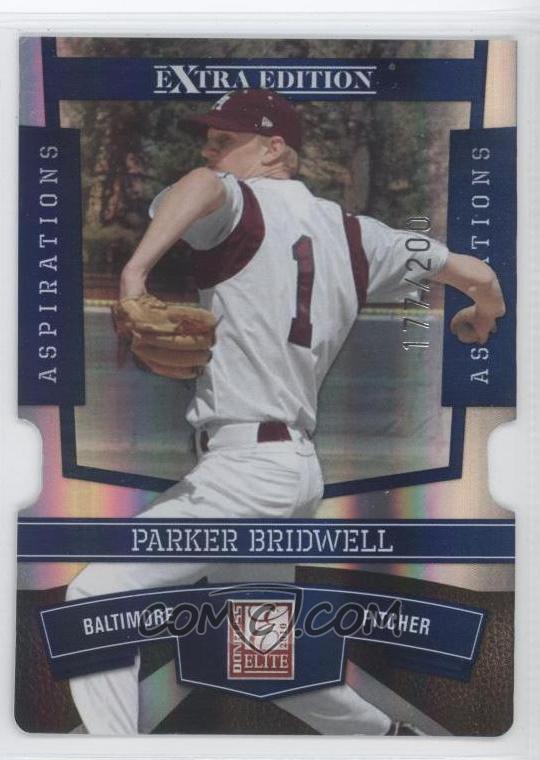
Parker Bridwell, rhp (53.2 IP, 56 H, 32 R, 27 ER, 22 BB, 57 SO)

Parker Bridwell garnered a good deal of attention from Orioles prospect followers after signing for $625,000 in 2010 and earning good reviews from fall workouts a month later. His 2011 was a mixed bag, as the young righty struggled to execute his pitches at low A Delmarva and was accordingly knocked around. After being demoted to short-season A Aberdeen, Bridwell showed a higher level of comfort on the mound, and more consistency in his arsenal. He returned to Delmarva to close out August and again struggled vacillating between catching too much of the plate and falling out of his control zone.

Bridwell's best offering is a heavy sinker generally in the 90-92 mph range, climbing to the mid-90s at various points this summer. When he drives the pitch down in the zone, he induces lots of soft contact -- a trend that should continue through the lower levels. Eventually he'll need to improve his command of the offering, as more discerning bats learn to lay off the pitch as it bores. His breaking ball is a slider that actually acts more like a deep cutter with late horizontal movement. Still a work in progress, Bridwell's change-up is now an adequate third offering with a chance to be average, and perhaps a tick above, as he continues to tinker.

Bridwell could be a solid mid-rotation starter down the line. He'll likely return to Delmarva in 2011 where he'll team up with 2011 1st Rounder Dylan Bundy, forming an interesting 1-2 at the top of the Shorebirds' rotation.

Players to know:

Jake Cowan utilizes a four pitch mix, often working backwards to help his average fastball play up. Cowan's best secondary is a snappy slider that has good arm slot deception. He'll also bring a 12-to-6 curve with average depth and bite. His offspeed looks like a variation of a circle or three-finger change, which he rolls over on occasion to elicit fade. Once thought of as projectable, Cowan hasn't bulked-up as expected, though there is still time for him to add some strength. He could develop into a back-end arm or swingman with four usable offerings.

2011 draftee and former Illinois Figthing Illini Adam Davis is a standout defensive backstop with limited offensive upside. Davis shows quick feet and a solid, accurate arm. He excels as a field general, was known around the Big 10 as a strong positive influence on his pitching staff, and shows comfort throwing the ball behind runners at all bases. At the plate, Davis has an unrefined slap approach, lacking real leverage and expanding the zone too often. Baltimore will work to make him adequate offensively, in an effort to mold him into a back-up catcher capable of providing plus defense behind the plate.

We were out in front on first year outfielder Glynn Davis, tabbing him as the 16th best prospect in O's system after he signed as an undrafted free agent out of Catonsville CC (Md.). The speedy Davis is a true "80" runner on the 20-80 scouting scale, and progressed in his approach this summer both offensively and defensively. He is similar in body type to Hunter Pence, though he lacks Pence's current physicality. Davis projects to above-average defense in center, elite speed and an average hit tool with fringe-average power. If he can develop an on-base approach, he could be useful as a #1 or #2 hitter capable of reaching base via infield hit and stretching extra bases as he works out the gaps. He'll need to add strength, but has time to do so. He should get the gig as starting center fielder in Delmarva next summer.

Mychal Givens bounced around between Aberdeen and Delmarva, struggling to build any momentum either in the field or at the plate. The compact middle-infielder has good arm strength, but doesn't set-up his throws well and utilizes an open, slingy arm action that cause throws from the left side to tail off target. Couple that with fringy range and a tendency to swipe, rather than field through the ball, and Givens fits best at second base, where he logged most of his time this summer. Offensively, Givens has a flat swing plane and can drag through the hit zone. He may get another year to prove himself in the field, but it can't be long before Baltimore decides to try him on the mound, where his side-armed delivery produces low- to mid-90s fastballs and a low-80s sweeping slider.

Trent Howard logged 14 appearances (all starts) for Central Michigan prior to being selected by Baltimore in the 2011 draft, and followed up those 87.1 innings with another 41.1 IP in Aberdeen. He projects as a back-end innings eater, and could move quickly through the system -- albeit with limited upside. His upper-80s sinker works well in tandem with his short slider, and he'll mix in a curve and a change-up throughout his starts, as well. He has a sturdy frame and simple mechanics that allow him to repeat and maintain throughout his starts. He shows above-average command, which helps the effectiveness of his average arsenal.

Connor Narron shows flashes of upside with the bat, but struggled this year to find any consistency at the plate. From the middle-out he handles the bat well and can push the ball to the opposite field when he needs to. There's leverage in his swing, and the former Carolina prepster can put a charge into the ball during BP. But he struggles to cover the inner-half of the plate and his swing got long this summer as he tried to hit for more power. Sometimes labeled by scouts as overly selective at the plate, Narron has to learn to be more aggressive in the right situations, and to more fully cover the hit zone.

Tyler Wilson served the Virginia Cavaliers in every capacity possible, logging innings as a starter, in long relief, middle relief, and as a late inning arm, over the course of his four-year career. As a pro, he has the four pitch mix to stick as a starter, but his average stuff across the board would probably play best in the pen. He was dominant for Virginia as a Sunday/weekday starter in the spring, and carried that success over into the summer where he logged six strong starts for Aberdeen. He spots his 88-91 mph fastball well, and will drop in a curve, slider or changeup in any count.

Aaron Wirsch was limited to just 10 IP this summer, suffering a UCL tear in his pitching elbow and underjoing Tommy John surgery, but is a name to know for 2013. A projectable lefty out of El Toro HS (Lake Forest, Calif.) in 2009, Wirsch has added 25-pounds over the past two years, now measuring in at 6-foot-5 and 215 pounds. The velocity increase has not accompanied the added mass, though the big southpaw has seen spotty action at best over the past three seasons, longing just under 40 IP total due to various ailments. Baltimore will look forward to having a healthy Wirsch back, who at his best brings an average fastball and two potential above-average secondaries in his deceptive change-up and curveball.

Mike Wright, another 2011 draftee, started seven games for Aberdeen but most likely fits better in relief, long term. He has a short arm circle on the back side and low arm slot, creating a tough angle for hitters to try and square his sinker/slider combo. His sinker is a low-90s offering that can bump mid-90s in short stints, and his slider compliments it well. He spots both pitches to both sides of the plate. His offspeed lags behind in development, and will likely be a focus for 2012.

09 October 2011

Rundown of Orioles on Baseball America's Top Prospects Lists

This is a quick review of the individuals in the Orioles' system who have received top 20 acknowledgements from their leagues, respectively.  To read more about the players, check out the links.  The links require a subscription to Baseball America, which is worthwhile if you truly are interested in amateur and minor league baseball.  Alternatively, you can wait out on a little more Oriole focused coverage as our very own Nick Faleris will be rolling out our top 30 organizational prospects list.  As many of you know, when Nick is not writing for us, he is plying his talents over at his own website, DiamondScape Scouting.

Gulf Coast League (Rookie Ball)
GCL Orioles

12. Roderick Bernadina, OF
18. Eduardo Rodriguez, LHP

Summarized Chat Comments:
  • Sebastian Vader and Juan Guzman did not receive consideration for top 20 list.
  • Failed infielder turned pitcher, Jose Nivar, is hitting mid-90s and interesting.
  • Miguel Chalas is another live arm, but has unspectacular secondary offerings.
New York - Penn League (Short Season A Ball)
Aberdeen Ironbirds

10. Parker Bridwell, RHP
15. Glynn Davis, CF

Summarized Chat Comments:
  • Mychal Givens has a plus arm, but has yet to pull anything together.
  • At similar points in their career, Bridwell shows more velocity, but less polish than Zach Britton did.
South Atlantic League (A Ball)
Delmarva Shorebirds

2. Manny Machado, SS
9. Jonathan Schoop, SS/3B

Summarized Chat Comments:
  • Machado's bat makes him a special SS prospect, but there is a chance he has to move to 3B.
  • A workable comp for Machado is Troy Tulowitzki, but Troy's defense is better.
  • Schoop's bat is a notch below Machado, but he should be able to play 2B or 3B in the Majors.
Carolina League (High A Ball)
Frederick Keys

1. Manny Machado, SS
6. Jonathan Schoop, 2B/SS
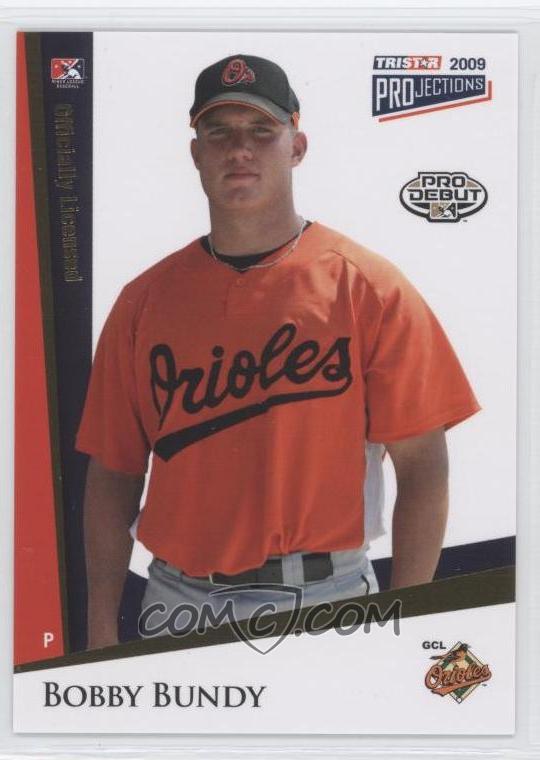
15. Bobby Bundy, RHP

Summarized Chat Comments:
  • Machado was one of the youngest players in HiA ball and hit league average.
  • Schoop is 1B to Machado's 1A.
  • Machado is the second best SS prospect in baseball because he may become a 3B.
Eastern League (AA Ball)
Bowie Baysox

None listed

Summarized Chat Comments:
  • Xavier Avery just missed out of the top 20 largely because he is a very toolsy player who has yet to put it all together in a baseball package.
  • LJ Hoes is almost off the prospect scene because his bat does not project as a corner outfield bat.  (Unsure if John Manuel's sources actually saw him play 2B).

International League (AAA Ball)
Norfolk Tides

None Listed

Summarized Chat Comments:

No questions asked about Tides.

CDOBC: But Didn't We Have Fun? Chp 9-11

For more about the book club and books on the agenda click here.

Time having spun away from me lately, we are going again in three chapters to finish this book and move on to Weaver on Strategy.  I hope I am not doing Peter Morris' book a disservice as this almost actually resembled a book club last time when a comment was fielded.  Let's get exponential!

But Didn't We Have Fun? An Informal History of Baseball's Pioneer Era 1843-1870
by Peter Morris

Chapter: 1 | 2 | 3 | 4 | 5 | 6, 7, 8 | 9, 10, 11 | 12 | 13

Yes, Harry Wright started out with Cricket
Chapter 9: The Civil War, The End of an Era, part I

It has often been said, incorrectly, that the Civil War was a boon for baseball.  That Abner Doubleday and others used Union camps to teach and play baseball.  That this caused a great dispersion of the game and sent it to all corners of the United States.  From this book, we learn that baseball was alive, well, and thriving throughout from just below the Mason Dixon line and northward (I am unsure why the South is so little mentioned in this book and find it strange that baseball was not being playing to a greater degree in some of the larger towns in the South).  We also learn that there is no evidence that Doubleday ever had an interest or was aware of the game.

What the Civil War did though was resulted in the mass enlistment of young men that depleted the ranks of baseball clubs, causing the majority of them to shut down or merge with the remnants of other teams.  Larger cities could cope and play games between the couple of clubs left, but small cities and towns stopped seeing highly organized games.  The war not only led to enlistment of young men, but the mass crippling and slaughter of those young men.  This made it difficult for towns to put teams together during and in the aftermath of the war.  It likely also caused many a good and dedicated player to move from those smaller towns to larger ones.  Combine that with the advent of the train and migration becomes far easier.  Baseball was ceasing as a community club and turning into a business in and of its own.

Chapter 10: Competitiveness and Professionalism, and What they Wrought, The End of an Era, part II

As cities grew, baseball playing fields became fewer and of poorer quality.  However, throngs of spectators would attend these games.  This made for a ripe environment for business ventures to emerge.  An entity would build enclosed baseball stadiums and sign agreements for teams to make the stadium their home field.  This arrangement often had no money being exchanged.  In turn, the owners of the ball park would then charge admission to spectators who chose to attend these games.  This inevitably led to the ball players becoming irritated at having money made off of them, so agreements were then made to pay the players.

This meant that for your team to be successful, you need to have revenue streams.  Players were now being regularly paid to play which hurt smaller towns who did not have the revenue streams to build stadiums and then pay their players.  The good ones migrated to areas where the could be paid to play.  Even cities as large as Philadelphia did not have a large enough market for these things to occur, which resulted in many ball players migrated to New York, Cincinnati, and Washington DC. 
Washington DC had revenue for a ball club, the Washington Nationals, because it grifted money from the federal government.  Players were given solid government jobs that were primarily located in the treasury department.  This enabled the team to spend large sums on their players and also fund train travel throughout the United States for barn storming ventures.

Chapter 11: The Cincinnati Base Ball Club and the Red Stockings

The Cincinnati Base Ball Club was basically the final nail in the coffin for the long term viability of baseball being a successful amateur game.  The city was successful and did not need much advertisement, so the club did not truly operate as ambassadors for the city.  Instead, they became the cities desired reflection.  The direction of the club was not outward, but inward.  The team was based on civic pride.  Civic pride is often competitive and so the team as a reflection of the city also needed to be competitive, so it made sense for the base ball club to become one of the first clubs to be completely made up of paid professional players with nearly all of them not from Cincinnati.

The team ran out the slate in 1869 undefeated.  They were the darling of Cincinnati and a beacon for the city.  However, with the coming of openly professional players in 1869, Cincinnati team was basically practicing Moneyball.  The inefficiency in the market in 1869 were ball players who got paid.  By 1870, Cincinnati's Moneyball scheme became simply baseball.  They lost several games and were eventually disbanded as the non-native club began to disgrace the city on and off the field.  No doubt, the losing on the field was the main issue, but players did things such as walk into saloons while wearing their uniform.  This was strictly frowned upon.

Thus, the Cincinnati Base Ball Club shut down their experiment with professionalism.  Harry Wright and the Red Stockings reconstituted their team in Boston wearing the same exact uniforms.  This eventually led to a slight change in the name to Red Sox.  Professionalism could not be done away with, but rather merely move around to where it was more acceptable and profitable.  In a period of about two decades, the game shifted from serving as a municipality's diplomatic arm to an inward focused expression of civic pride to a simple capitalistic venture in civic pride's clothing.

Next up . . . the evolution of the game to a strong undercurrent of 'Muffin Ball.'