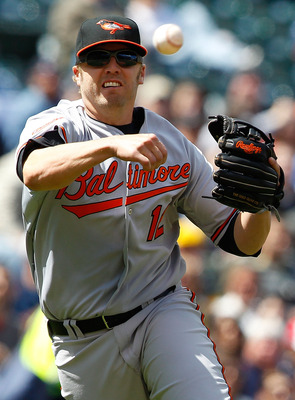
The Orioles took last night away from the Reds in 12 innings with the 5-4 final score. In the top of the twelfth, Adam Jones did not play Jay Bruce double well. The encourage the Reds to send Joey Votto home, but the relay and Wieters at home were solid, preventing the run to score. A few moments later, lineup protector Derrek Lee lifted a shot into the left field stands for a walk off home run. It was his first home run in a little over a month and a half. It was not an incredibly pretty win, but it was against a team that has a solid offense and decent pitching.
One more note...Blake Davis earned his first major league hit with a two run triple. Congratulations to him.
---
I was reading the Sun's Matt Vensel's interview with Heath Blintiff of Dempsey's Army (and our Last Week in Chat post on Mondays that we host for him). Toward the end of the interview, Heath mentions that one of the primary things the Orioles need to do is sign J.J. Hardy to an extension. I'm not sure I entirely agree with that. J.J. Hardy is experiencing a career year at 28 years old for a shortstop. These kind of performances warrant contracts of about 5-6 years in length and north of 10MM. With Hardy's background, he will not make the killing Jose Reyes will make this off season, but he will be a far more reasonable options for someone willing to squint their eyes and massage over the injuries as well as an uneven history. I think much of the glamor on him comes from his impressive 2007 and 2008 seasons where he was able to show good contact and a very good glove. I'm not sure we can completely trust that 2009 and 2010 were abnormalities. However, those seasons might melt away with his 390 wOBA which is just 2 points away from the leader, Jose Reyes. This season, J.J. Hardy is an elite shortstop again.
Earlier this season, I was in full favor of extending Hardy. Keeping him under contract for 2-3 additional years would enable the Orioles to have a good hitting and fielding shortstop while we wait for Manny Machado. Additionally, Hardy could slide over to third if needed. I think at the beginning of this year, the team could have extended Hardy for about 7 or so MM a year. This off season will consist of basically him and Reyes at shortstop with several shortstop hungry teams. I think it has made extending Hardy misguided and may largely be impractical with the Orioles apparent budget. Hardy is a bit of a risk that I would be fine with at 7MM, but not 14MM. I also think we need to consider how much longer he will be capable of playing shortstop as he is not particularly quick. A five year extension with Hardy might be similar to what we are seeing with Brian Roberts.
This leaves us with the best solution when handed a position player who is having a career year at a shallow league wide talent position and is only being paid a few million over the rest of the season . . . a trade. I think a decent comparison could be drawn to the Athletics and Cardinals trade that sent Matt Holliday to St. Louis for Brett Wallace, Clayton Mortenson, and Shane Petersen. This was a trade for a player who was struggling in Oakland, but had a history of success and a somewhat sizable remaining contract. Hardy is someone who has had success in the past, recent injuries, recent incredible performance, and a cheap contract (~2.5MM left) at a premium position. Where the A's were able to receive a first tier and two third tier prospects. I think the Orioles could must a low first tier and two low second tier prospects.
So who is in need?
San Francisco Giants
The Giants thought they were solving their shortstop problems by installing Miguel Tejada at shortstop. Unfortunately, they apparently had only a highlight reel of him to use to gauge his defense. As much as I love Tejada, this season is likely to be his last. He has no defensive value at shortstop and he has none at the plate. In the past, poor performance has been explained away as being the product of him being an emotional player and not being in a playoff situation. With a tight NL West, it just is not much of an excuse. His replacement has been Camden Depot shadow draftee Brandon Crawford whose glove plays excellently in the majors. However, he hits as well as the starting rotation and the Giants need more offense if they truly want to compete.
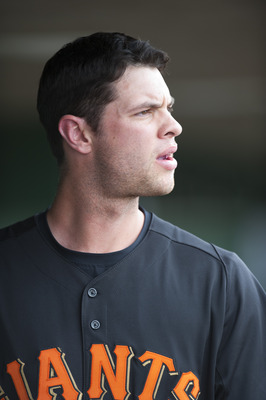
The key in a deal to the Giants would be Brandon Belt. He is a legitimate top 25 bat at first base. The Giants did not immediately find success with him this season and if they want to play for now . . . they may be willing to sell off part of the future. Belt would be the Orioles Brett Wallace in this scenario. I think he is a better prospect than Wallace was, but there really is not another high level prospect available in the Giants organization except for lower level pitcher and Camden Depot shadow draftee Zach Wheeler. The second player I would target would be 3B Adam Duvall a 22 year old in low A ball. He is a fringe C level prospect who has shown more power and plate discipline this year, which may convince some to push him up to a B level prospect. He does have issues with contact and not much of a track record of success. I would also go with Jason Stoffel for the third piece. I have always liked him. He does not do anything particularly spectacular, but he can pitch. He could be a middle relief arm in 2012 or 2013.
Milwaukee Brewers
Yuniesky Betancourt is killing them up the middle and three teams are within three games of them. The Brewers need some help and would be much better off with their ex-SS J.J. Hardy in their lineup. This might be Prince's last year in Milwaukee, so it might be their last shot. However, J.J. and the Brewers did not exactly leave on the best terms possible as they demoted him which tacked on an extra arbitration year. Another stumbling block is that the Brewers system does not contain any readily identifiable gems. You could go with a quantity trade with Taylor Green, Khristopher Davis, and Matt Gamel. Maybe throw in a couple pitchers like Thornburg or Peralta. I don't think this is something that the Orioles should do though. It made sense when our system was thin on depth, but we have depth now. What the system lacks are top tier prospects. I don't see any in the Brewers system. They have several guys who have a chance of being MLB players, but we already have too many players like them.
Cincinnati Reds
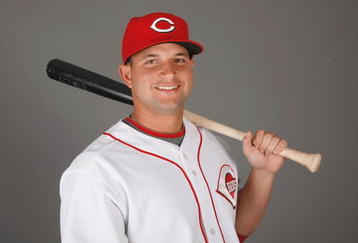
The Reds are also hurting with Paul Janish and Edar Renteria at shortstop. Only three games out, they are in prime position to take the NL Central. The clear target here would be Yonder Alonso. The Reds are playing him in left field with the idea that him and Joey Votto can co-exist on the field. He is not taking well to left field. Another issue is that he is a bit of a platoon type hitter. He may be a poor man's version of Ryan Howard. However, he is a very good first base talent. He is a high second tier type player. Another player I would target as a top third tier guy with high upside is 2B Henry Rodriguez. At 21, he has earned himself a promotion to AA and shows good contact and batspeed. If he continues his progression, a solid infield of the future could be Alonso, Rodriguez, Machado, and Schoop. That could be an optimist's dream. Todd Frazier's ability to play anywhere on the field would also make him a decent target.
Conclusion
I think we can all agree that the Brewers should not be considered. They just do not have the right pieces. The Giants are known to value immediate contribution over long term value, so they may be the easiest to deal with. They certainly have the best piece available in Brandon Belt. The Reds are slightly more averse to selling away the future, but they have several upper tier prospects. No one is as highly regarded as Belt, but both of their catching prospects have high marks. The Orioles would not be interested in the catchers, but in positions for which the Reds already have occupants. If I was in charge, I would be targeting Belt first, then Alonso, and then shrugging and paying Hardy for 4-5 years recognizing I'd probably be fired before it becomes obvious that the extension was a bad idea.
A collection of items and links about the Baltimore Orioles . . . sometimes, baseball in general.
25 June 2011
24 June 2011
Cup of jO's: Jonathan Schoop is from Curacao
No MLB game yesterday for the O's
---
The rosters for the XM All Star Futures Game were released yesterday. The Orioles placed Manny Machado on the US team and Jonathan Schoop on the World team. Most teams have two representatives with Brewers, Yankees, Athletics, Giants, Cubs, Angels, Blue Jays, Marlins, Astros, and Dodgers only having one. These are great accomplishments for the players selected, but we should not view these rosters as being full of the top 60 or so talents in the minors. That said, Manny Machado has been proclaimed by Baseball America as the best SS prospect in the minors and has made a few mid-season top ten lists even with time lost for a dislocated kneecap. Jonathan Schoop has also be lauded by Keith Law and others as a top 50 prospect with an outside shot at the top 25.
Schoop is of particular interest because he is an international signee. The Orioles are notorious for being late to the international free agent market and for preferring to spend resources on domestic talent through the draft. They are continually in the bottom five for international signing bonuses and that is with a considerable increase in money spent the past couple years. Still, they seem to have hit on a player from Curacao. It is well known that there is a lot of talent that is signed for less than 100k in other countries. Teams like the Rockies and Rangers have invested into ties to foreign countries and showing that they are dependable organizations that help players develop. Prospects who are not elite level prospects often will wind up signing deals that are sometimes half of what other teams are offering. For instance, if you read Venezuela Bust, Baseball Boom you find a dozen or so examples of players who signed with the Astros at lower prices (e.g. $30,000) than what other organizations are offering (e.g. $75,000). This is not truly remarkable when you consider life before the draft in the US. If you read Dollar Sign on the Muscle, you find that old time scouts often mention how a particular scout being in with the family for years could often persuade them to sign for less than what other organizations could offer.
What is remarkable about Schoop and the Orioles is that my guess is that the Orioles are not well established in Curacao. Although, for an organization like the Orioles who spend so little in the international free agent agent, a small side talent pool like Curacao is likely to bring them more success than competing with more established and better funded groups in the Dominican. This may also be a reason for the Orioles continued apparent reluctance to more forcefully enter the Venezuelan market for players. Instead, we see the Orioles push money into Curacao, Nicaragua, Panama, and other locations where MLB scouting may not be as intense. It is exciting to have Schoop in the fold though.
I first heard of Schoop as a player to watch before the 2010 season when he played in the rookie leagues as an 18 year old. Talent evaluators within the Orioles were known to be quite impressed with him and that sentiment rapidly spread out before spring training. He proceeded to hit for good power, have a high contact rate, and managed to walk at a decent rate. As a result he popped up on a number of top ten prospect sheets for the Orioles. He started the year off with Delmarva primarily at third base, but also filling in for an injured Manny Machado at third. Schoop managed an impressive 316/376/514 line, which pushed him up to Frederick. At Frederick, he has played all around the infield and has had initial struggles. He has shown power though and after an adjustment period he should do fine. Schoop is good enough for his bat to play at that level and it is his bat that is pushing him upwards.
With Machado now at Frederick, you are going to see some exciting play there. I advise anyone within close proximity of the Keys to go and watch these two as often as possible.
---
The rosters for the XM All Star Futures Game were released yesterday. The Orioles placed Manny Machado on the US team and Jonathan Schoop on the World team. Most teams have two representatives with Brewers, Yankees, Athletics, Giants, Cubs, Angels, Blue Jays, Marlins, Astros, and Dodgers only having one. These are great accomplishments for the players selected, but we should not view these rosters as being full of the top 60 or so talents in the minors. That said, Manny Machado has been proclaimed by Baseball America as the best SS prospect in the minors and has made a few mid-season top ten lists even with time lost for a dislocated kneecap. Jonathan Schoop has also be lauded by Keith Law and others as a top 50 prospect with an outside shot at the top 25.
Schoop is of particular interest because he is an international signee. The Orioles are notorious for being late to the international free agent market and for preferring to spend resources on domestic talent through the draft. They are continually in the bottom five for international signing bonuses and that is with a considerable increase in money spent the past couple years. Still, they seem to have hit on a player from Curacao. It is well known that there is a lot of talent that is signed for less than 100k in other countries. Teams like the Rockies and Rangers have invested into ties to foreign countries and showing that they are dependable organizations that help players develop. Prospects who are not elite level prospects often will wind up signing deals that are sometimes half of what other teams are offering. For instance, if you read Venezuela Bust, Baseball Boom you find a dozen or so examples of players who signed with the Astros at lower prices (e.g. $30,000) than what other organizations are offering (e.g. $75,000). This is not truly remarkable when you consider life before the draft in the US. If you read Dollar Sign on the Muscle, you find that old time scouts often mention how a particular scout being in with the family for years could often persuade them to sign for less than what other organizations could offer.
What is remarkable about Schoop and the Orioles is that my guess is that the Orioles are not well established in Curacao. Although, for an organization like the Orioles who spend so little in the international free agent agent, a small side talent pool like Curacao is likely to bring them more success than competing with more established and better funded groups in the Dominican. This may also be a reason for the Orioles continued apparent reluctance to more forcefully enter the Venezuelan market for players. Instead, we see the Orioles push money into Curacao, Nicaragua, Panama, and other locations where MLB scouting may not be as intense. It is exciting to have Schoop in the fold though.
I first heard of Schoop as a player to watch before the 2010 season when he played in the rookie leagues as an 18 year old. Talent evaluators within the Orioles were known to be quite impressed with him and that sentiment rapidly spread out before spring training. He proceeded to hit for good power, have a high contact rate, and managed to walk at a decent rate. As a result he popped up on a number of top ten prospect sheets for the Orioles. He started the year off with Delmarva primarily at third base, but also filling in for an injured Manny Machado at third. Schoop managed an impressive 316/376/514 line, which pushed him up to Frederick. At Frederick, he has played all around the infield and has had initial struggles. He has shown power though and after an adjustment period he should do fine. Schoop is good enough for his bat to play at that level and it is his bat that is pushing him upwards.
With Machado now at Frederick, you are going to see some exciting play there. I advise anyone within close proximity of the Keys to go and watch these two as often as possible.
23 June 2011
They lathe bats, don't they?: Making Bats for Orioles (Part II)
In part II, Allan Donato (DS Wood Bats (twitter)) and I discuss more on how bats are made. This will include some information on what players ask for when ordering a bat and even a little bit on issues with bats breaking into splinters.
Jon Shepherd: When a player comes to you and asks for bats what specifications do they typically ask for?
Allan Donato: When I speak to a player about their order, the important things are what wood type (ash, maple or birch), what bat model (a set model or custom model), length, weight, cup or no cup, finish, and engraving they would like. There are a lot more variables than most people think.
JS: From your own experience, what makes for a good bat?
AD: Not only does the quality of the wood make a bat good, but making it exactly like the client wants makes it a good bat. I see bats a lot of times that are not made exactly as the player asks and they are disappointed. Majority of the time, this has to do with the bat being heavier than they would like. Feel is a big thing in baseball. Players want the bat to feel a certain way, and you must duplicate that feeling.
JS: There has been a great deal of talk about wood types and the danger of shattering bats. Is this something that has to be accepted as part of the game or not? Have you looked into ways for making bats safer and what would they be?
AD: There definitely has been a great deal of talk about the shattering of maple bats lately. I think it has been accepted as part of the game for a while now, but as of late I believe they are trying to educate the players and public more and show them this should not happen to the extent it has. The testing done by a third party company through MLB has done a great job of showing what is causing the breakages and helping to educate and resolve the problem.
AD: We have three lathes that we use to cut and sand the bats. One of our lathes is a Centauro which is used to duplicate and model that we turn by hand. We also have a Jet lathe that is much smaller and used to turn our models by hand and make templates, along with a Delta that we use to sand our bats by hand. For finishing the bats we also use a laser engraver to engrave the model, name and team into the bat.
Jon Shepherd: When a player comes to you and asks for bats what specifications do they typically ask for?
Allan Donato: When I speak to a player about their order, the important things are what wood type (ash, maple or birch), what bat model (a set model or custom model), length, weight, cup or no cup, finish, and engraving they would like. There are a lot more variables than most people think.
JS: From your own experience, what makes for a good bat?
AD: Not only does the quality of the wood make a bat good, but making it exactly like the client wants makes it a good bat. I see bats a lot of times that are not made exactly as the player asks and they are disappointed. Majority of the time, this has to do with the bat being heavier than they would like. Feel is a big thing in baseball. Players want the bat to feel a certain way, and you must duplicate that feeling.
JS: There has been a great deal of talk about wood types and the danger of shattering bats. Is this something that has to be accepted as part of the game or not? Have you looked into ways for making bats safer and what would they be?
JS: Not being a maker of bats, I imagine I am missing things that might be important with respect to making an excellent bat. Is there anything you would like to add?
AD: I think one thing that gets over looked about the smaller companies like ourselves is the amount of handcrafting that goes into every bat. We aren't the type of large company with numerous lathes and automatic sanders that has machines doing the vast majority of the work. Every bat has hands touching it from the mill, to the lathe, to the finishing room. Every aspect is done by hand in some fashion. There is a lot of time and effort that goes into every single bat.
JS: Finally, this may be too technical for some, but what pieces of equipment do you use to make a bat and how long does it take to make one?
Cup of jO's (June 23, 2011): 3-6 against the Blue Jays, Nationals and Pirates...
Game Wrap
Pirates 5, Baltimore 4
Box Score / Play-By-Play / AP Summary
Zach Britton pitched well enough to keep the O's in the game, but is still drastically lacking in command -- particularly in the zone. Nick Markakis, J.J. Hardy and Mark Reynolds each squared a few, continuing to swing the bat well. But in the end, Baltimore once again fell short -- drop the series to the Pirates and finishing a disappointing road trip at 3-6. All the details in the recap linked above.
Of interest...
Of interest to me today is Baltimore Sun's Jeff Zrebiec's wrap of a disappointing roadtrip. The piece includes some interesting comments from a number of Orioles, including skipper Buck Showalter. All the typical "rough times in baseball" responses are covered, including this "can't dwell on the bad" from Buck:
a sentiment echoed by last year's most potent offensive O's weapon:
There is truth to each of these statements. Baltimore has had to deal with some tough luck and some injuries. Another stark truth, unfortunately, is that until Baltimore shows the rest of baseball -- in the win column -- that the organization has turned a corner, it won't matter how much promising talent is on the roster or how many ESPN and Baseball America articles cite changes for the better in the front office and on the farm. The Orioles are, once again, in last. They are among the five worst teams in all of MLB in run differential, and they just dropped six of nine to three teams with plenty of their own struggles.
Does anyone honestly believe a free agent like Prince Fielder or Jose Reyes would look at this situation from the outside and feel confident that they will be part of a winning organization in Baltimore? Heck, how confident do you feel that J.J. Hardy will be willing to stick around if he continues with his impressive production in 2011?
The Andy MacPhail era started with a bang. The Bedard and Tejada trades brought in a solid collection of young talent, and Baltimore nabbed Matt Wieters, Jake Arrieta and Brian Matusz in an 18-month span. Since then, the additions to the farm have dwindled, and the Birds have remained firmly in the bottom third of baseball at the end of each season.
Within the next couple of years the young talent is going to start hitting arbitration and Baltimore will accordingly need to consider which kids they can afford to extend and which will need to be moved for more young talent. This off-season is of paramount importance. Either Baltimore figures out a way to bring in the right pieces to supplement this core and build a competitive 25-man roster, or we could once again be pointing ahead to the next collection of prospects that will turn things around -- this time Machado, Bundy, Bundy and Schoop.
This organization needs to put behind it the days of struggling with the other teams in the bottom third of baseball. Until they do, the idea of sticking with the likes of New York, Boston and Tampa will remain a pipedream...
Pirates 5, Baltimore 4
Box Score / Play-By-Play / AP Summary
Zach Britton pitched well enough to keep the O's in the game, but is still drastically lacking in command -- particularly in the zone. Nick Markakis, J.J. Hardy and Mark Reynolds each squared a few, continuing to swing the bat well. But in the end, Baltimore once again fell short -- drop the series to the Pirates and finishing a disappointing road trip at 3-6. All the details in the recap linked above.
Of interest...
Of interest to me today is Baltimore Sun's Jeff Zrebiec's wrap of a disappointing roadtrip. The piece includes some interesting comments from a number of Orioles, including skipper Buck Showalter. All the typical "rough times in baseball" responses are covered, including this "can't dwell on the bad" from Buck:
"If you dwell on it between here and the plane, you can't live in that world...I can come back on some games that didn't look like they presented a good option for us but we ended up winning those games. We won one game in each city that we went into, and we'll try to learn from it. If you stay in that 'woe is me' mentality, nobody feels sorry for you. You've got to pick yourself up. We had some good things happen on this trip. We swung the bats well. Some guys are giving us a chance. We're fighting through some health things." -Buck Showalter, Manager
a sentiment echoed by last year's most potent offensive O's weapon:
"We're a much better team than what we're showing on the field. The only thing we can do is keep working hard and try to get to the point where we can maximize our potential. We haven't done that yet." -Luke Scott, DH/OF
There is truth to each of these statements. Baltimore has had to deal with some tough luck and some injuries. Another stark truth, unfortunately, is that until Baltimore shows the rest of baseball -- in the win column -- that the organization has turned a corner, it won't matter how much promising talent is on the roster or how many ESPN and Baseball America articles cite changes for the better in the front office and on the farm. The Orioles are, once again, in last. They are among the five worst teams in all of MLB in run differential, and they just dropped six of nine to three teams with plenty of their own struggles.
Does anyone honestly believe a free agent like Prince Fielder or Jose Reyes would look at this situation from the outside and feel confident that they will be part of a winning organization in Baltimore? Heck, how confident do you feel that J.J. Hardy will be willing to stick around if he continues with his impressive production in 2011?
The Andy MacPhail era started with a bang. The Bedard and Tejada trades brought in a solid collection of young talent, and Baltimore nabbed Matt Wieters, Jake Arrieta and Brian Matusz in an 18-month span. Since then, the additions to the farm have dwindled, and the Birds have remained firmly in the bottom third of baseball at the end of each season.
Within the next couple of years the young talent is going to start hitting arbitration and Baltimore will accordingly need to consider which kids they can afford to extend and which will need to be moved for more young talent. This off-season is of paramount importance. Either Baltimore figures out a way to bring in the right pieces to supplement this core and build a competitive 25-man roster, or we could once again be pointing ahead to the next collection of prospects that will turn things around -- this time Machado, Bundy, Bundy and Schoop.
This organization needs to put behind it the days of struggling with the other teams in the bottom third of baseball. Until they do, the idea of sticking with the likes of New York, Boston and Tampa will remain a pipedream...
22 June 2011
Cup of jO's (June 22, 2011): Karsten Whitson makes us look smart
Game Wrap
Pirates 9, Baltimore 3
Box Score / Play-By-Play / AP Summary
Another start from Jeremy Guthrie, another punchless night for the offense. Granted, this time around Guthrie contributed to his own demise allow five runs in the first three innings before settling down and lasting into the seventh. Baltimore was 0-7 with runners in scoring position, and solo homers from J.J. Hardy and Adam Jones highlighted an otherwise pedestrian night at the plate for the Birds. Zach Britton will try to right the ship this afternoon -- click here for a preview of the 12:35 pm (eastern) conclusion to the three game series with the Bucs, and nine game road trip. Baltimore currently sits 3 - 5 over that span.
Of interest...
Of interest to me this morning was the College World Series. I've been prepping for a number of summer scouting trips (including the Tournament of Stars this week/weekend) and have not been able to follow the games live. But I did catch Aaron Fitt's (Baseball America) blog entry recapping of Karsten Whitson's start for the University of Florida. Readers will recall that Whitson was our pick in last year's Shadow Draft as the #3 overall talent in the class behind Bryce Harper and Jameson Taillon.
While it seemed crazy to most that we would rate Whitson ahead of fellow prep standout and actual Orioles selection Manny Machado, that ranking doesn't look quite so crazy a year removed. That's not to say that Whitson has established himself as a better talent. Far from it. We will need much more time to figure out which of these two studs is ultimately the more valuable "get". But Whitson has impressed everyone, stepping into the weekend rotation as a true freshman at one of the top programs in the country. His stat line for the year includes a 2.42 ERA, 81.2 IP over 16 starts, a .238 BAA, 8.49 SO/9, 2.64 BB/9, just two homeruns allowed and a spotless (and admittedly meaningless) 8-0 record. Click here for College Splits breakdown with normalized numbers, as well.
Florida remains undefeated thus far in pool play, and it's highly likely that if they make the championship we will see Whitson again. Make sure to tune in and take a gander at the fastball/slider combo, impressive command and projectable build that has him atop follow lists for 2013, and the frontrunner to go first overall. Each of the CWS games are being televised on the ESPN Family of Networks, including live streaming online at ESPN 3.
Pirates 9, Baltimore 3
Box Score / Play-By-Play / AP Summary
Another start from Jeremy Guthrie, another punchless night for the offense. Granted, this time around Guthrie contributed to his own demise allow five runs in the first three innings before settling down and lasting into the seventh. Baltimore was 0-7 with runners in scoring position, and solo homers from J.J. Hardy and Adam Jones highlighted an otherwise pedestrian night at the plate for the Birds. Zach Britton will try to right the ship this afternoon -- click here for a preview of the 12:35 pm (eastern) conclusion to the three game series with the Bucs, and nine game road trip. Baltimore currently sits 3 - 5 over that span.
Of interest...
Of interest to me this morning was the College World Series. I've been prepping for a number of summer scouting trips (including the Tournament of Stars this week/weekend) and have not been able to follow the games live. But I did catch Aaron Fitt's (Baseball America) blog entry recapping of Karsten Whitson's start for the University of Florida. Readers will recall that Whitson was our pick in last year's Shadow Draft as the #3 overall talent in the class behind Bryce Harper and Jameson Taillon.
While it seemed crazy to most that we would rate Whitson ahead of fellow prep standout and actual Orioles selection Manny Machado, that ranking doesn't look quite so crazy a year removed. That's not to say that Whitson has established himself as a better talent. Far from it. We will need much more time to figure out which of these two studs is ultimately the more valuable "get". But Whitson has impressed everyone, stepping into the weekend rotation as a true freshman at one of the top programs in the country. His stat line for the year includes a 2.42 ERA, 81.2 IP over 16 starts, a .238 BAA, 8.49 SO/9, 2.64 BB/9, just two homeruns allowed and a spotless (and admittedly meaningless) 8-0 record. Click here for College Splits breakdown with normalized numbers, as well.
Florida remains undefeated thus far in pool play, and it's highly likely that if they make the championship we will see Whitson again. Make sure to tune in and take a gander at the fastball/slider combo, impressive command and projectable build that has him atop follow lists for 2013, and the frontrunner to go first overall. Each of the CWS games are being televised on the ESPN Family of Networks, including live streaming online at ESPN 3.
21 June 2011
They lathe bats, don't they?: Making Bats for Orioles
We here at Camden Depot enjoy looking at baseball in ways that we think are often overlooked. Sometimes this includes interviews. In the past we have interviewed a fellow evaluator of talent in A ball, a writer of Japanese baseball, the author of a book on baseball statistics, an agent that represented several Orioles players, a blogger of Cuban baseball, and a film maker who is putting together a documentary on baseball in the Dominican which featured Miguel Sano. I typically do not go out of my way to grab interviews, but when something interesting falls into my lap . . . it makes sense to me.
A month or so ago, I was talking to one of my readers about the utility of the way I was evaluating college hitters. In the midst of that conversation, he mentioned that one of his ex-teammates on Purdue's baseball team had recently started up a baseball bat wood working operation, DS Wood Bats (twitter). To make it more relevant to the Baltimore Orioles, this outfit supplies several players in the organization with bats. I contacted one of the founders, Allan Donato, and will share his answers about how he started his business and bat making in general.
Jon Shepherd: What led you to becoming a professional bat maker? What is the proper name for someone who makes bats?
Allan Donato: I grew up in Harrisburg, PA where I didn't necessarily focus on baseball primarily, but always had a huge love for the game. I was an all-state baseball player in high school and ended up taking a scholarship to play collegiately at Purdue University. I played for a bit after college in the Frontier League (Independent) before being approached with the idea to begin this business by my business partner, Richie Schwartz. Rich played collegiately at Lebanon Valley College and was working in politics at the time and had decided he wanted to continue to be in baseball. He had a true passion for hitting and loved bats. He had some woodworking experience and sold me on the fact that he could make bats. We bought a lathe that week and the rest is history. It took a great deal of research, trial and error, and effort to get this point. We have come a long way.
JS: Interesting. By the way, what is the proper term for someone who makes bats? I'd hate to get this wrong.
AD: I have no idea what the proper term would be for a people who make bats, but I truly believe it is an art. Most people don't understand the craftsmanship that goes into producing a bat for someone. When people come visit our shop and watch us they really appreciate it afterwards.
AD: It took a few things to really take our small business and make us grow this rapidly. First, the product itself has been amazing. We are extremely confident in the wood and the craftsmanship, and truly believe we make the best bats on the market. Not only the product, but it takes being approved for use in the major and minor leagues and also the relationships we have developed. Once we became approved, myself and our VP of Operations, Jared Smith, traveled down to spring training and went camp to camp to develop the relationships we have established today. Finally, it also takes flat out luck.
JS: Which players in the Orioles organization use your bats?
AD: We have bats in the hands of Nick Markakis, Jake Fox, Brandon Snyder, Robert Andino, Billy Rowell, Joe Mahoney, as well as a few others. I also have several other minor league players who have reached out to me to try our product as they have seen it at several levels.
![]() |
| Website |
Jon Shepherd: What led you to becoming a professional bat maker? What is the proper name for someone who makes bats?
Allan Donato: I grew up in Harrisburg, PA where I didn't necessarily focus on baseball primarily, but always had a huge love for the game. I was an all-state baseball player in high school and ended up taking a scholarship to play collegiately at Purdue University. I played for a bit after college in the Frontier League (Independent) before being approached with the idea to begin this business by my business partner, Richie Schwartz. Rich played collegiately at Lebanon Valley College and was working in politics at the time and had decided he wanted to continue to be in baseball. He had a true passion for hitting and loved bats. He had some woodworking experience and sold me on the fact that he could make bats. We bought a lathe that week and the rest is history. It took a great deal of research, trial and error, and effort to get this point. We have come a long way.
JS: Interesting. By the way, what is the proper term for someone who makes bats? I'd hate to get this wrong.
AD: I have no idea what the proper term would be for a people who make bats, but I truly believe it is an art. Most people don't understand the craftsmanship that goes into producing a bat for someone. When people come visit our shop and watch us they really appreciate it afterwards.
JS: I have noticed that several players in the Orioles organization use bats you make. How have you been able to take a small business and rapidly make such gains in the market?
AD: It took a few things to really take our small business and make us grow this rapidly. First, the product itself has been amazing. We are extremely confident in the wood and the craftsmanship, and truly believe we make the best bats on the market. Not only the product, but it takes being approved for use in the major and minor leagues and also the relationships we have developed. Once we became approved, myself and our VP of Operations, Jared Smith, traveled down to spring training and went camp to camp to develop the relationships we have established today. Finally, it also takes flat out luck.
We got in touch with Nick Markakis through luck. Billy Rowell, one of our clients on the Bowie Baysox, ordered bats a few days before Bowie was in Harrisburg to play the Senators. When Richie delivered the bats, he brought a few extras and happened to run into Jeff Fiorentino who tried our bats and loved them. Jeff raved about our product, ordered from us, and then offered to contact his close friend Nick for us. Once we got bats to Nick, he was very happy with them also and has continued to work with us to this day. So as you can see, it definitely takes a great deal of skill and hard work, but it takes some luck also.
JS: Which players in the Orioles organization use your bats?
AD: We have bats in the hands of Nick Markakis, Jake Fox, Brandon Snyder, Robert Andino, Billy Rowell, Joe Mahoney, as well as a few others. I also have several other minor league players who have reached out to me to try our product as they have seen it at several levels.
AD: Our plans for the future have changed quite a bit over the past year because of how quickly we have grown. Right now I would say our plans for the future are to continue to build the clientele in the major and minor leagues through showing the great quality of our product and ability to give the client exactly what they are looking for. I think in turn, we will expand our amateur market drastically by showing the drastic rise in popularity of our product in the pro market. Again, we have grown so much so quickly, that our plans can change quickly, but ultimately we definitely want to make sure we entrench ourselves in the pro market.
---
In part II (which will be posted on Thursday), Allan and I discuss focus more on how bats are made. This will include some information on what players ask for when ordering a bat and even a little bit on issues with bats breaking into splinters.
Cup of jO's (June 21, 2011): Bad luck or poor planning?
Game Wrap
Pirates 3, Baltimore 8
Box Score / Play-By-Play / AP Summary
The O's jumped on Charlie Morton and the Bucs for five runs in the first inning last night, and never relinquished the lead. Nick Markakis continues to improve on his hard contact rate, goin 3 for 5 with a double and extending his hit streak to eleven games. Jake Arrieta wasn't his best, but he spotted his fastball well enough and continues to show improved consistency -- particularly in snapping off his curve. Click here for Stats LLC's preview of game two of the series, which features Jeremy Guthrie taking the hill for birds opposite James McDonald.
Of interest...
Of interest to me this morning was an article at Fangraphs.com by Steve Slowinski, touching on some misfortunes that have contributed to a disappointing first half of the season. First, let me say that I've run into Steve's work at DRaysBay.com and have generally found it to be fair and thoughtful. This article in particular is nice because it serves as a snapshot of what an informed outsider thinks of the O's, their 2011 season and their future potential.
What jumps out right away is the inclusion of Brian Robert's injury, the struggles by Derrek Lee and Vlad Guerrero and the inconsistencies in the bullpen on the list of misfortunes that have beset Baltimore on all sides. Technically, I don't disagree with any of this. The same, none jump out as particularly surprising. And this is, I think, the issue that most critics of the front office will point to when complaining of "lack of progress."
At the start of the season I expressed strong support of the acquisition of Lee, J.J. Hardy and Mark Reynolds. All were low-risk moves that represented potentially large improvements over their 2010 counterparts. Additionally, Reynolds represented a potential multi-year solution. I still believe Lee will prove to be a fine contributor for the 2011 season, though it likely leaves Baltimore looking to fill a first base hole again come November. Hardy is mixed blessing, as a strong 2011 would be a blessing coming from the shortstop position, but probably limits the chances of Baltimore extending him at a reasonable rate (plenty of good organizations will be willing to pony up some cash for a quality shortstop coming off of a successful year). Guerrero has been trending sharply downwards for some time, with a first half uptick in 2010 glaringly out of place. The extra money tacked on to his deal this year means Baltimore likely will not be able to offer arbitration (again) to one of its players, for fear it might be accepted.
The acquisition of Kevin Gregg, Jeremy Accardo and (last year) Mike Gonzalez continue to leave me scratching my head. While the outlay for Accardo was minimal, both Gregg and Gonzalez represented not insignificant cash, with Gonzalez also causing Baltimore to forfeit their second round pick in 2010. Considering the volatility associated with relief pitching in general -- and both Gregg and Gonzalez in particular -- these moves seem to underscore a valuation system that is not well suited to the savvy AL East. Baltimore cannot afford to be the organization that shuns the "risk" associated with low seven-figure deals for elite Latin American prospects, while shoveling multiple years, eight figures, and draft picks at relief arms.
As for Brian Roberts, the situation is just unfortunate. Camden Depot has been on the record for a few years as generally being opposed to an extension for the aging second baseman, and hard set against the length and cash investment Baltimore ultimately doled out to Roberts. As one of our favorite Birds, it's disappointing to see him off the field so much these past two years, and nothing would please Jon or me more than being proven absolutely wrong for doubting his production over the extension would match the money paid. But the reality is that Baltimore owes another $20 million through 2013, and it's unlikely at this point that they will receive even production worth even half of that.
For an organization that continually claims to be limited in available payroll resources, these simply aren't the moves you like to see being made. Long eight figure extensions for aging second basemen, relief arms and aging designated hitters simply cannot be spun as sound investments in the long term, and it's tough to see why a team like the Orioles would push so many resources into simply scraping .500, rather than taking their lumps and building and implementing a long term plan with a chance to produce one of the top five teams in baseball -- and make no mistake that is what you need to be to compete in this division.
Yes, 2011 has included some truly unfortunate occurrences. Looking past the surface to the decisions shaping the general direction of the franchise, one has to wonder if even the best of luck will ultimately make much difference in the standings. This upcoming off-season looms large, as Baltimore has entered their "window" with a young core. They will need to decide between July and November whether there is enough in this core to make a hard off-season push worth while. If the answer is no, fans will have to start looking to the arrival of Manny Machado and Dylan Bundy (assuming he signs), and whatever fellow prospects help consitute the next "wave" promising that, yes, one September in the future the O's will be playing meaningful baseball.
Pirates 3, Baltimore 8
Box Score / Play-By-Play / AP Summary
The O's jumped on Charlie Morton and the Bucs for five runs in the first inning last night, and never relinquished the lead. Nick Markakis continues to improve on his hard contact rate, goin 3 for 5 with a double and extending his hit streak to eleven games. Jake Arrieta wasn't his best, but he spotted his fastball well enough and continues to show improved consistency -- particularly in snapping off his curve. Click here for Stats LLC's preview of game two of the series, which features Jeremy Guthrie taking the hill for birds opposite James McDonald.
Of interest...
Of interest to me this morning was an article at Fangraphs.com by Steve Slowinski, touching on some misfortunes that have contributed to a disappointing first half of the season. First, let me say that I've run into Steve's work at DRaysBay.com and have generally found it to be fair and thoughtful. This article in particular is nice because it serves as a snapshot of what an informed outsider thinks of the O's, their 2011 season and their future potential.
What jumps out right away is the inclusion of Brian Robert's injury, the struggles by Derrek Lee and Vlad Guerrero and the inconsistencies in the bullpen on the list of misfortunes that have beset Baltimore on all sides. Technically, I don't disagree with any of this. The same, none jump out as particularly surprising. And this is, I think, the issue that most critics of the front office will point to when complaining of "lack of progress."
At the start of the season I expressed strong support of the acquisition of Lee, J.J. Hardy and Mark Reynolds. All were low-risk moves that represented potentially large improvements over their 2010 counterparts. Additionally, Reynolds represented a potential multi-year solution. I still believe Lee will prove to be a fine contributor for the 2011 season, though it likely leaves Baltimore looking to fill a first base hole again come November. Hardy is mixed blessing, as a strong 2011 would be a blessing coming from the shortstop position, but probably limits the chances of Baltimore extending him at a reasonable rate (plenty of good organizations will be willing to pony up some cash for a quality shortstop coming off of a successful year). Guerrero has been trending sharply downwards for some time, with a first half uptick in 2010 glaringly out of place. The extra money tacked on to his deal this year means Baltimore likely will not be able to offer arbitration (again) to one of its players, for fear it might be accepted.
The acquisition of Kevin Gregg, Jeremy Accardo and (last year) Mike Gonzalez continue to leave me scratching my head. While the outlay for Accardo was minimal, both Gregg and Gonzalez represented not insignificant cash, with Gonzalez also causing Baltimore to forfeit their second round pick in 2010. Considering the volatility associated with relief pitching in general -- and both Gregg and Gonzalez in particular -- these moves seem to underscore a valuation system that is not well suited to the savvy AL East. Baltimore cannot afford to be the organization that shuns the "risk" associated with low seven-figure deals for elite Latin American prospects, while shoveling multiple years, eight figures, and draft picks at relief arms.
As for Brian Roberts, the situation is just unfortunate. Camden Depot has been on the record for a few years as generally being opposed to an extension for the aging second baseman, and hard set against the length and cash investment Baltimore ultimately doled out to Roberts. As one of our favorite Birds, it's disappointing to see him off the field so much these past two years, and nothing would please Jon or me more than being proven absolutely wrong for doubting his production over the extension would match the money paid. But the reality is that Baltimore owes another $20 million through 2013, and it's unlikely at this point that they will receive even production worth even half of that.
For an organization that continually claims to be limited in available payroll resources, these simply aren't the moves you like to see being made. Long eight figure extensions for aging second basemen, relief arms and aging designated hitters simply cannot be spun as sound investments in the long term, and it's tough to see why a team like the Orioles would push so many resources into simply scraping .500, rather than taking their lumps and building and implementing a long term plan with a chance to produce one of the top five teams in baseball -- and make no mistake that is what you need to be to compete in this division.
Yes, 2011 has included some truly unfortunate occurrences. Looking past the surface to the decisions shaping the general direction of the franchise, one has to wonder if even the best of luck will ultimately make much difference in the standings. This upcoming off-season looms large, as Baltimore has entered their "window" with a young core. They will need to decide between July and November whether there is enough in this core to make a hard off-season push worth while. If the answer is no, fans will have to start looking to the arrival of Manny Machado and Dylan Bundy (assuming he signs), and whatever fellow prospects help consitute the next "wave" promising that, yes, one September in the future the O's will be playing meaningful baseball.
20 June 2011
Dempsey's Army Presents: Last Week in Chats (June 12 - June 19, 2011)
Monday afternoons Heath from Dempsey's Army will recount all things Baltimore Orioles from the previous week's chats. It is a convenient way to learn what national writers think about specific issues that relate to the Orioles.
Where we distill all the week's baseball chats down to their Oriole essence...
Jonah Keri, FanGraphs.com
1:48 Comment From Tim
Favorite sabermetric book, aside from Extra 2% and Baseball Between the Numbers?
1:48 Jonah Keri:
Weaver On Strategy
Matt Eddy, Baseball America
Kyle (Maine):
Does Andrew Miller still have a chance to be a quality major league starter?
Matthew Eddy:
Given what pitchers like Phil Humber and Jeremy Guthrie have accomplished after being written off, I would say just about anything is possible for Miller if you pair him with the right pitching coach and in the right situation. He's a tough look for lefty batters, so I could see him thriving in a relief role the rest of the way. Miller's three primary pitches have distinct velos and shape to them, and I have to say I'm kind of intrigued.
Jack Moore, FanGraphs.com
11:59 Comment From Joe Braga
Which trade was worse for the Twins - getting rid of Hardy or getting rid of
Ramos?
12:01 Jack Moore: This is a pretty tough one. On the one hand, the Twins dumped Hardy for almost nothing in order to clear room for Alexi Casilla, which, I think to anybody not named Bill Smith or Ron Gardenhire, is pretty clearly a silly move. On the other hand, the Twins dumped their only capable backup catcher for a reliever who costs seven million dollars, which, if you listen to the front office, may have actually forced the Hardy trade.
So it depends, if you think that adding Capps to the payroll forced the Hardy trade (not sure I actually believe that), then the Ramos trade is worse. For this year, the Hardy trade is worse to me because I don't think you envision Mauer missing so much time at such a young age, whereas the Ramos trade was likely to have its impact farther down the road. Long-term, losing Ramos is probably a bigger deal, especially now with Mauer's issues.
12:03 Comment From Brendan
Rank the AL shortstops? Yunel, Hardy, Asdrubel, Lowrie, and Alexei?
12:04 Jack Moore: Actual baseball: Alexei, Hardy, Yunel, Lowrie, Asdrubal, but these guys are all quite good players.
12:04 Comment From Patrick
10-team head to head league, keep Britton or pick-up Daniel Hudson?
12:05 Jack Moore: I would prefer Hudson to Britton, yes. Britton has been overachieving all year (not that I think he's bad, just that he's not quite ready to pitch like he has), and Hudson's been underachieving.
Ben Lindbergh, Baseball Prospectus
fgbaloh (allentown):
I don't understand anyone thinking Bundy over Cole. They have similar great stuff but Cole has performed and stayed healthy for 3 more years. Besides that, most reports I read suggest Bundy has little projection. Bunndy has a chance to either get hurt or flame out in the next three years. Without ever seeing either I think Cole hands down. Your thoughts?
Ben Lindbergh:
Like you, I'd basically be echoing someone else's opinion either way. I can't say I have any special insight here.
David Schonfield, ESPN
Josh (NJ)
David, I think one thing the current MLB has going for it is the rivalries within the divisions. I feel that some of that would be lost with the proposed restructuring plan. That could have a big time negative impact ($$$) especially for teams who sell more tickets in during this rival series throughout the year. Your thoughts?
David Schoenfield (2:28 PM)
I don't know if I agree with that. The Orioles may draw more for the Yankees or Red Sox -- but everybody draws more for the Yankees or Red Sox. I don't think the Orioles are packing it in for Tampa Bay or Toronto. There are few good rivalries, but for the most fans want to see a winning team and don't care much about the opponent.
Matt Klaasen, FanGraphs.com
12:42 Comment From Jack
Magglio or Vlad to the M´s anytime soon? Jack Cust is terrible
12:43 Matt Klaassen: Not sure why the Ms need an older, just as terrible DH who is an even worse fit for their park.
1:34 Comment From Ben
Seems like the world has forgot the *ultra* hype machine Matt Wieters. He's actually having a very good year for a catcher and he's still pretty young. You see continued improvement?
1:35 Matt Klaassen: Yes I do. He won't ever be "Mauer with Piazza's power" or whatever people thought he would be, but he's got a decent bat and approach, some athletic upside, and combined with good defensive skills, that's still a potential star.
Keith Law, ESPN
Steve (Baltimore MD)
Any chance you'll get to travel to DR for games? Also, Jonathan Schoop ... top 25 next year?
Klaw (1:09 PM)
Not planning on it. I feel better about saying top 50 on him than top 25.
Luke (Baltimore)
Brian Matusz -- concerned?
Klaw (1:38 PM)
Sure, although as I said last week it's likely he's not 100% recovered from the injury.
Where we distill all the week's baseball chats down to their Oriole essence...
Jonah Keri, FanGraphs.com
1:48 Comment From Tim
Favorite sabermetric book, aside from Extra 2% and Baseball Between the Numbers?
1:48 Jonah Keri:
Weaver On Strategy
Matt Eddy, Baseball America
Kyle (Maine):
Does Andrew Miller still have a chance to be a quality major league starter?
Matthew Eddy:
Given what pitchers like Phil Humber and Jeremy Guthrie have accomplished after being written off, I would say just about anything is possible for Miller if you pair him with the right pitching coach and in the right situation. He's a tough look for lefty batters, so I could see him thriving in a relief role the rest of the way. Miller's three primary pitches have distinct velos and shape to them, and I have to say I'm kind of intrigued.
Jack Moore, FanGraphs.com
11:59 Comment From Joe Braga
Which trade was worse for the Twins - getting rid of Hardy or getting rid of
Ramos?
12:01 Jack Moore: This is a pretty tough one. On the one hand, the Twins dumped Hardy for almost nothing in order to clear room for Alexi Casilla, which, I think to anybody not named Bill Smith or Ron Gardenhire, is pretty clearly a silly move. On the other hand, the Twins dumped their only capable backup catcher for a reliever who costs seven million dollars, which, if you listen to the front office, may have actually forced the Hardy trade.
So it depends, if you think that adding Capps to the payroll forced the Hardy trade (not sure I actually believe that), then the Ramos trade is worse. For this year, the Hardy trade is worse to me because I don't think you envision Mauer missing so much time at such a young age, whereas the Ramos trade was likely to have its impact farther down the road. Long-term, losing Ramos is probably a bigger deal, especially now with Mauer's issues.
12:03 Comment From Brendan
Rank the AL shortstops? Yunel, Hardy, Asdrubel, Lowrie, and Alexei?
12:04 Jack Moore: Actual baseball: Alexei, Hardy, Yunel, Lowrie, Asdrubal, but these guys are all quite good players.
12:04 Comment From Patrick
10-team head to head league, keep Britton or pick-up Daniel Hudson?
12:05 Jack Moore: I would prefer Hudson to Britton, yes. Britton has been overachieving all year (not that I think he's bad, just that he's not quite ready to pitch like he has), and Hudson's been underachieving.
Ben Lindbergh, Baseball Prospectus
fgbaloh (allentown):
I don't understand anyone thinking Bundy over Cole. They have similar great stuff but Cole has performed and stayed healthy for 3 more years. Besides that, most reports I read suggest Bundy has little projection. Bunndy has a chance to either get hurt or flame out in the next three years. Without ever seeing either I think Cole hands down. Your thoughts?
Ben Lindbergh:
Like you, I'd basically be echoing someone else's opinion either way. I can't say I have any special insight here.
David Schonfield, ESPN
Josh (NJ)
David, I think one thing the current MLB has going for it is the rivalries within the divisions. I feel that some of that would be lost with the proposed restructuring plan. That could have a big time negative impact ($$$) especially for teams who sell more tickets in during this rival series throughout the year. Your thoughts?
David Schoenfield (2:28 PM)
I don't know if I agree with that. The Orioles may draw more for the Yankees or Red Sox -- but everybody draws more for the Yankees or Red Sox. I don't think the Orioles are packing it in for Tampa Bay or Toronto. There are few good rivalries, but for the most fans want to see a winning team and don't care much about the opponent.
Matt Klaasen, FanGraphs.com
12:42 Comment From Jack
Magglio or Vlad to the M´s anytime soon? Jack Cust is terrible
12:43 Matt Klaassen: Not sure why the Ms need an older, just as terrible DH who is an even worse fit for their park.
1:34 Comment From Ben
Seems like the world has forgot the *ultra* hype machine Matt Wieters. He's actually having a very good year for a catcher and he's still pretty young. You see continued improvement?
1:35 Matt Klaassen: Yes I do. He won't ever be "Mauer with Piazza's power" or whatever people thought he would be, but he's got a decent bat and approach, some athletic upside, and combined with good defensive skills, that's still a potential star.
Keith Law, ESPN
Steve (Baltimore MD)
Any chance you'll get to travel to DR for games? Also, Jonathan Schoop ... top 25 next year?
Klaw (1:09 PM)
Not planning on it. I feel better about saying top 50 on him than top 25.
Luke (Baltimore)
Brian Matusz -- concerned?
Klaw (1:38 PM)
Sure, although as I said last week it's likely he's not 100% recovered from the injury.
Cup of jO's (June 20, 2011): Britton taking his lumps
Game Wrap
Nationals 4, Baltimore 7
Box Score / Play-By-Play / AP Summary
JJ Hardy and Mark Reynolds made the front office look good today, as the left side of the infield (acquired this offseason) led the way with a combined 5-8 with two doubles and two homeruns. For the second straight series the O's avoided a sweep by salvaging the final game of the set. The team heads to Pittsburgh for the final third of their road trip. Jake Arrieta takes the hill opposite Charlie Morton.
Of interest...
Of interest to me this morning is Zach Britton's game log. It shows that over his last five starts he has posted a line of 28 IP, 34 H, 21 R, 16 ER, 12 BB, 18 SO and 3 HR. Britton's BB/9 currently sits at 3.2. With his SO/9 still below 6 (he has brought it up to 5.3), that is a lot of batted balls and probably too many baserunners between the walks and the balls that find their way through the defense. In early April I published up a brief scouting report on the young starter (original article here), noting the following:
Prospects will always excite a fan base, and the proliferation of prospect blogs and websites have grown into an echo chamber adding to the hype machine. As we touched on last week in discussing Major League deals for top draft picks, we need to keep in mind that the path through prospect development is seldom linear. That holds especially true for the final jump from AAA to the Bigs. With an immense talent like Britton, O's fans simply need to show a little patience and enjoy the ride.
Nationals 4, Baltimore 7
Box Score / Play-By-Play / AP Summary
JJ Hardy and Mark Reynolds made the front office look good today, as the left side of the infield (acquired this offseason) led the way with a combined 5-8 with two doubles and two homeruns. For the second straight series the O's avoided a sweep by salvaging the final game of the set. The team heads to Pittsburgh for the final third of their road trip. Jake Arrieta takes the hill opposite Charlie Morton.
Of interest...
Of interest to me this morning is Zach Britton's game log. It shows that over his last five starts he has posted a line of 28 IP, 34 H, 21 R, 16 ER, 12 BB, 18 SO and 3 HR. Britton's BB/9 currently sits at 3.2. With his SO/9 still below 6 (he has brought it up to 5.3), that is a lot of batted balls and probably too many baserunners between the walks and the balls that find their way through the defense. In early April I published up a brief scouting report on the young starter (original article here), noting the following:
[T]here could be some not insignificant growing pains as he finishes his development at the Major League level...The hard-throwing southpaw has a higher ceiling than any arm in the organization, though his proximity to that ceiling is still a ways off.This wasn't exactly stepping out on a limb -- young arms often take their share of lumps while learning to make adjustments at the Major League level. Still, I received a fair number of challenges to my "take" on the young hurler, with the highest degree of umbrage being taken with my statement that Britton was "a ways off" from his ceiling. Today's writing may seem like an "I told you so," but that couldn't be less the case. Rather, it's meant to be a reminder that these sorts of rough patches are to be expected, and fans have no reason to feel any less excited about having Britton as a fixture in the O's rotation for the foreseeable future.
Prospects will always excite a fan base, and the proliferation of prospect blogs and websites have grown into an echo chamber adding to the hype machine. As we touched on last week in discussing Major League deals for top draft picks, we need to keep in mind that the path through prospect development is seldom linear. That holds especially true for the final jump from AAA to the Bigs. With an immense talent like Britton, O's fans simply need to show a little patience and enjoy the ride.
19 June 2011
The Science of Baseball: June 19, 2011
![]() |
| In the pitching study, the pads were situated on the pitching arm. |
How Does Interleague Play Affect Attendance?
Gary Gillette and Pete Palmer (2006), Eric Rosen (2009), and Maury Brown (2010)
Typically, I try to keep the Science of Baseball discussions to more recent research, but I have been inundated with announcers and professional journalists telling me that interleague play is an attendance boom. I am told that attendance goes up about 10-15% simply due to this novelty. I could write an article on this, but it is simpler to point toward three solid pieces of research that have already been written and have all come to a similar conclusion: interleague play does not increase attendance league-wide as much as MLB claims. The numbers MLB quotes are accurate in that they compare average attendance between inter and intra league games. However, this ignores that MLB schedules interleague games for the summer when attendance is highest and that MLB schedules interleague games for weekend dates 50% more often than games within leagues.
Adjusting for the differences in schedules, the numbers are at best half what MLB claims and perhaps no different from regular games held this time of the year. The 2006 study puts the attendance bump for the '98-'06 seasons at 5.3%. The 2009 study puts the attendance bump for the '00-'08 seasons at 0.4%. The 2010 study compared attendance over two consecutive weekends and found the difference to be -0.63%. At the very least, we can conclude that MLB's claims of attendance boosts over 10% to be unfounded.
A caveat should be made in which specific rivalries are bound to increase attendance over what normally would be available. For instance, we should expect attendance to be higher for an Orioles-Nationals game due to geographic proximity. However, we also see this sort of thing within divisions as attendance is also higher when the Orioles face off with the Yankees or Red Sox. There does not seem to be anything remarkable about these games. What I would like to see and what I imagine someone is doing somewhere is to create a year by year chart to show how the fan base grew more and more indifferent toward interleague play.
Is the small ball strategy effective in winning games? A stochastic frontier production approach.
Lee 2011. J Product Analysis 35:51-59
Lee suggests that small ball baseball is taking over Korean baseball. That the success of Japan in the World Baseball Classics has convinced the majority of the team in Korean leagues to follow the ways of Japanese baseball as opposed to the American version of the game (which is far less about small ball). The way Lee tries to characterize a team as small ball or not is to measure three things: stolen base attempts, sacrifice hits, and the number of batters to appear in a game. He uses those three metrics as they are things he can measure and events that are largely the product of a manager's control on the game. Korean teams attempt to steal about 30% more, sacrifice 100% more, and bat 20% more players per game than do Major League Baseball teams. He then models these factors for the Korean league and finds that on base percentage and slugging are far more important than those three factors. He also finds that attempting to steal correlates with a positive increase in run scoring. He also found that sacrifice hits and pinch hitting negatively correlated with run scoring. The lesson here might be that in the Korean leagues that managers are overvaluing the utility of bunting and pinch hitting.
I find this interesting because it reminds me of a regression I ran to determine how speed was valued differently between different positions in a batting lineup. I have the numbers all calculated and the explanations in my head, but I have never gotten around to publishing it. Anyway, what was most interesting to me was that speed was found to be negatively correlated to run production for the lead off slot in a batting lineup. A quick assessment would lead someone to say that speed is not important for a lead off hitter, which would be an incorrect assessment from my perspective. What that study actually told me was that managers were going out of their way to put fast runners first in the lineup without any regard for their actual offensive ability. Speed is actually very good for a leadoff hitter, but it looked bad because players were chosen for that position without consideration of their other talents (or lack thereof).
Effect of three different between-inning recovery methods on baseball pitching performance.
Warren et al. 2011 J Stren Cond Res 25:683-688
This study was interested in whether there is any truth to a few best practices suggested for maintaining pitching performance during a game. Passive recovery was assessed. This technique was tested by having the pitcher simply sit and not move. The idea behind this being useful is that the body can focus on regenerating glycogen reserves, but it is thought that this can take 15-25 minutes to actually be useful in restoring those reserves. In this study, pitchers were given six minutes between innings. Another technique considered was active recovery. You may be most aware of this with respect to Michael Phelps and swimming competitions. After races, swimmers will often "cool down" with laps. This is often thought to be one of the more successful techniques because it causes an increase in blood flow, which helps supply muscles with oxygen and reducing acid content. In this study, the pitchers were told to lightly jog between innings. The final technique used in this study was electromuscular stimulation. This involves using electrical stimulation to cause muscle contractions which will increase the blood flow without straining the heart. I personally am not aware of any athlete who uses this, but it would not surprise me if they did. Though, it would surprise me if pitchers ever used this during a game. For this study, college pitchers were used. They threw on four days rest and they threw three simulated innings with six minutes between innings.
The results of the study were interesting. The pitchers reported that they felt more rested by implementing the passive recovery and electromuscular stimulation techniques. These two approaches also resulted in pitchers being able to retain their pitch speed. Active recovery was not perceived as beneficial. When they measured the pitchers lactic acid content, they found that only electromuscular stimulation resulted in a decrease. They conclude that teams should be more open minded and explore the utility of implementing electromuscular stimulation for pitchers between innings.
Me? It sounds very interesting, but I would be interested in seeing more studies on this.
Cup of jO's (June 19, 2011): Introducing the 2011 July 2 IFAs
Game Wrap
Nationals 4, Baltimore 2
Box Score / Play-By-Play / AP Summary
Don't look now, but the Nats are building the type of excitement that Baltimore was hoping to capture this summer. Now winners of eight in a row, and one game from .500, the other side of the beltway is starting to generate at least a little buzz. Add to that the expected arrival next year of Bryce Harper and the expected return of Stephen Strasburg, as well as a slightly more winnable division in the NL East, and you have a recipe for a team turning things around. Time will tell which organization flips the script first, but as Baltimore stares down the possibility of being swept by their perennial neighboring cellar-dwellers, it's tough to remain optimistic. Some good news -- despite a rough line, Brian Matusz saw a slight climb in his sitting velocity yesterday and much more feel for his offerings (though he did leave the game with a tweaked calf).
Of interest...
Of interest to me this morning is a series of articles by Baseball America's Ben Badler, upon whom many fans rely when it comes to getting a quick breakdown of the class of international free agents hitting the market on July 2nd of a given year. Each posted last, and the article I'd like to focus on is subscriber material only, focusing on some of the top outfielders available in this year's July 2nd crop.
One benefit of the increase in prospect/draft interest is that some of the showcase companies, as well as some of the trainers and agents down south, have started to work to get the talented Latin American ballplayers some exposure on the showcase circuit. Two Octobers ago top Dominican prospect Wagner Mateo traveled to Jupiter to lace them up with the Texas Yankees Scout Team (a team that also found O's top draft pick Dylan Bundy on the roster). Last August I got a sneak peak of power hitting outfielder Ronald Guzman (video below).
Guzman is exactly the type of talent for which O's fans are hoping Baltimore will eventually open up it's check book. Highly projectable with quick hands, leverage and enough raw power now to make it easy to envision plus or better in-game power in the future. He was overmatched at the Under Armour All-America Game (of course, he was just 15 at the time, playing against the top rising high school seniors in the United States.
Guzman is one of several potential power bats in a bumper crop of international talent. As with the First Year Amateur Player Draft earlier this month, 2011 represents a good opportunity for teams to invest in the future. These players are less developed than even the high school draft-eligible talents, and represent more risk, to be sure. But they also represent an open market for adding more potential premium young talent to the farm system.
Later this week and next we'll take a closer look at some other July 2 IFAs, as well as the question as to how much sense it makes to pump money into this market at this time.
Nationals 4, Baltimore 2
Box Score / Play-By-Play / AP Summary
Don't look now, but the Nats are building the type of excitement that Baltimore was hoping to capture this summer. Now winners of eight in a row, and one game from .500, the other side of the beltway is starting to generate at least a little buzz. Add to that the expected arrival next year of Bryce Harper and the expected return of Stephen Strasburg, as well as a slightly more winnable division in the NL East, and you have a recipe for a team turning things around. Time will tell which organization flips the script first, but as Baltimore stares down the possibility of being swept by their perennial neighboring cellar-dwellers, it's tough to remain optimistic. Some good news -- despite a rough line, Brian Matusz saw a slight climb in his sitting velocity yesterday and much more feel for his offerings (though he did leave the game with a tweaked calf).
Of interest...
Of interest to me this morning is a series of articles by Baseball America's Ben Badler, upon whom many fans rely when it comes to getting a quick breakdown of the class of international free agents hitting the market on July 2nd of a given year. Each posted last, and the article I'd like to focus on is subscriber material only, focusing on some of the top outfielders available in this year's July 2nd crop.
One benefit of the increase in prospect/draft interest is that some of the showcase companies, as well as some of the trainers and agents down south, have started to work to get the talented Latin American ballplayers some exposure on the showcase circuit. Two Octobers ago top Dominican prospect Wagner Mateo traveled to Jupiter to lace them up with the Texas Yankees Scout Team (a team that also found O's top draft pick Dylan Bundy on the roster). Last August I got a sneak peak of power hitting outfielder Ronald Guzman (video below).
Guzman is exactly the type of talent for which O's fans are hoping Baltimore will eventually open up it's check book. Highly projectable with quick hands, leverage and enough raw power now to make it easy to envision plus or better in-game power in the future. He was overmatched at the Under Armour All-America Game (of course, he was just 15 at the time, playing against the top rising high school seniors in the United States.
Guzman is one of several potential power bats in a bumper crop of international talent. As with the First Year Amateur Player Draft earlier this month, 2011 represents a good opportunity for teams to invest in the future. These players are less developed than even the high school draft-eligible talents, and represent more risk, to be sure. But they also represent an open market for adding more potential premium young talent to the farm system.
Later this week and next we'll take a closer look at some other July 2 IFAs, as well as the question as to how much sense it makes to pump money into this market at this time.
Subscribe to:
Posts (Atom)